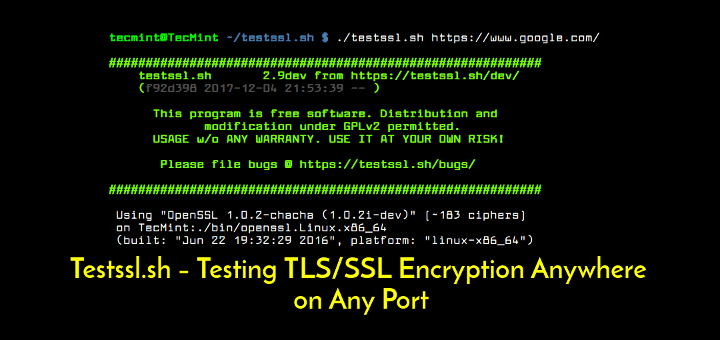
Testssl.sh – Testing TLS/SSL Encryption Anywhere on Any Port
testssl.sh is a free and open-source, feature-rich command-line tool used for checking TLS/SSL encryption enabled services for supported ciphers, protocols,

testssl.sh is a free and open-source, feature-rich command-line tool used for checking TLS/SSL encryption enabled services for supported ciphers, protocols,
Now more than ever, we are living in a world where organizations are constantly bombarded by security breaches motivated by

Over the years, there has been an exponential adoption of Cloud services as organizations seek to tap into the numerous

Apache Spark is an open-source distributed computational framework that is created to provide faster computational results. It is an in-memory
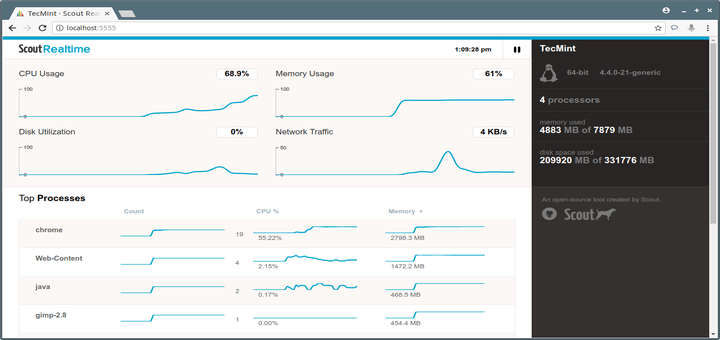
In the past, we’ve covered lots of command-line-based tools for monitoring Linux performance, such as top, htop, atop, glances, and

Apache NIFI is an open-source scalable tool to manage transformation, data routing, and system mediation logic. To put it in

Serverless technology has generated a lot of hype in the tech community evoking a lot of curiosity and receiving some
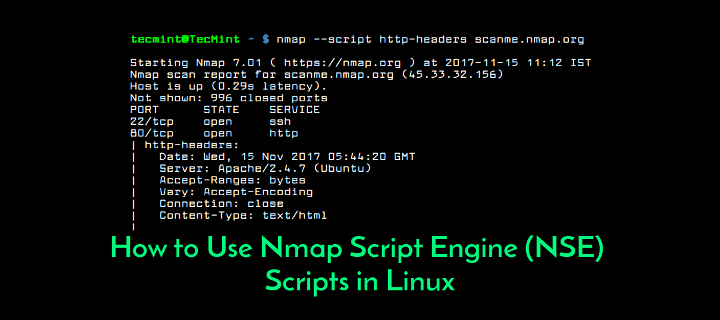
Nmap is a popular, powerful and cross-platform command-line network security scanner and exploration tool. It can also help you get

In the last article, we have covered few useful tools like ‘rTorrent‘, ‘wget‘, ‘cURL‘, ‘w3m‘, and ‘Elinks‘. We got lots

In the previous topic of our LFCA series, we gave an introduction to Cloud computing, the different types and Clouds,
Cloud computing is a popular buzzword that refers to an on-demand technology that has taken over the technology world by
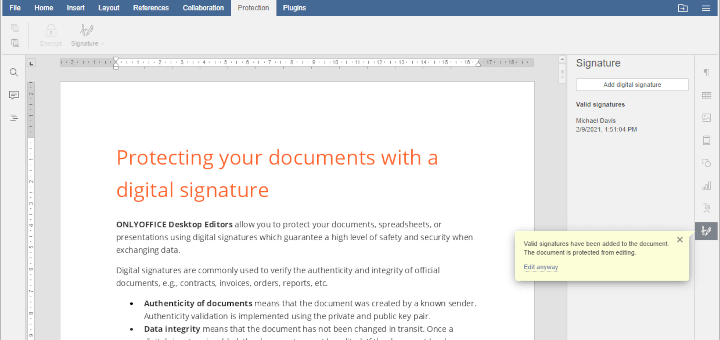
One of the most reliable ways to protect your documents and their content from any alterations is using a digital