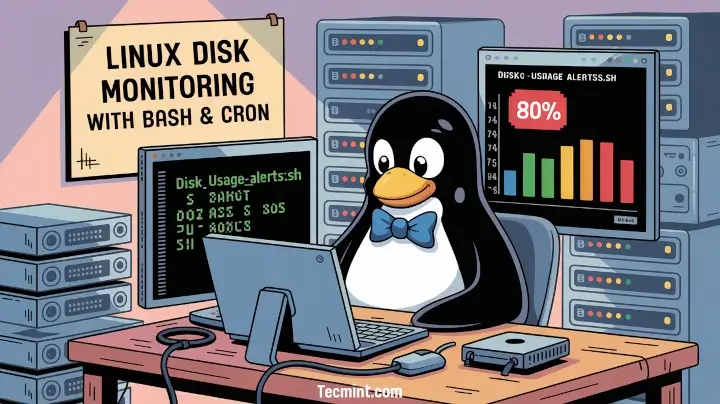
A Shell Script to Monitor Disk Usage and Send an Alert if it Exceeds 80%
If you’ve ever run a Linux system in production or even just kept a personal server, you’ll know that running

 Ravi Saive
If you’ve ever run a Linux system in production or even just kept a personal server, you’ll know that running

It isn’t easy to figure out which of the many Linux apps out there are actually worth installing. Between endless

Linux Mint 22.2 (“Zara”) is the latest point release in the Linux Mint 22 series, which is a Long Term

As a Linux user, you may eventually run into a situation where your root partition (/) runs out of space,

Do you feel like your Ubuntu desktop turns messy the moment you open more than a few apps? Always dragging
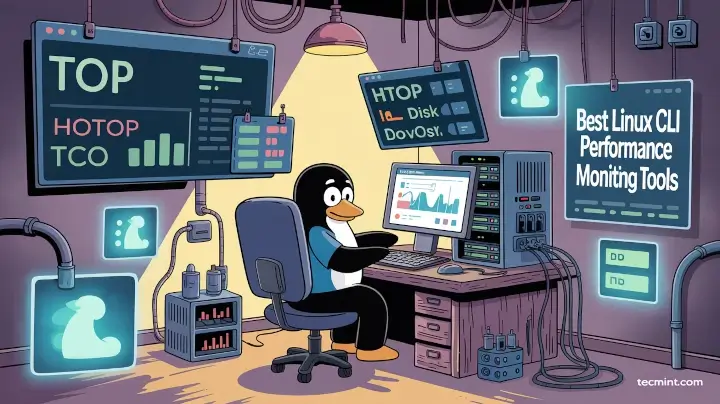
Being a System or Network administrator tasked with monitoring and debugging Linux system performance problems on a daily basis is

Asciinema is an open-source terminal recording tool that makes it super easy to share your command-line work with others. Unlike
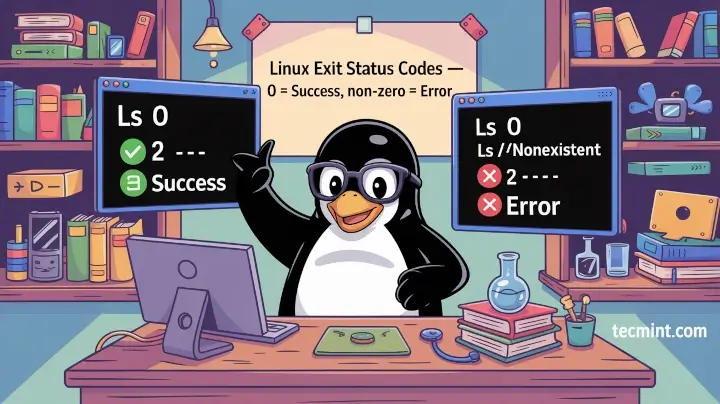
When working on a Linux system, every command you run returns a status code (also called an exit status or

As someone who has been using Linux for more than 12 years, I’ve often come across the same question: “Can
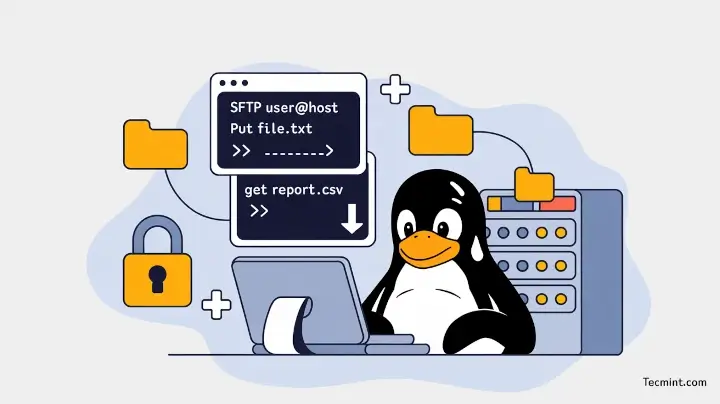
File Transfer Protocol (FTP) was once a widely used method for transferring files or data remotely. However, it transmits information
If you’ve ever tried to set up HTTPS locally for development, you’ve probably run into a wall of complexity. Generating
Linux configuration files are often plain text, which makes them easily editable using command-line tools. Among the most powerful of