Skip to content
Learn Linux in 7 structured days, the free course inside Pro TecMint Sudo tier    Enroll Free
Tecmint: Linux Howtos, Tutorials & Guides
  • Latest Tutorials
  • Commands
    • A – Z Linux Commands
    • 100+ Linux Commands
  • Tools
  • Distros
    • Linux Distros for Beginners
    • Linux Distros for Experts
    • New Linux Distros
    • Linux Server Distros
    • Secure Linux Distros
    • CentOS Alternatives
    • RedHat Distributions
    • Debian Distributions
    • Ubuntu Distributions
    • Arch Linux Distros
    • Rolling Linux Distros
    • KDE Linux Distros
    • Linux Distros for Old PC
    • Linux Distros for Kids
    • Linux Distributions for Students
    • Linux Distros for Windows
  • Courses
    • Bash Scripting
    • Learn Linux
    • AI for Linux
    • RHCSA Certification
    • RHCE Certification
    • LFCS Certification
  • eBooks
    • RHCSA Exam
    • RHCE Exam
    • LFCS Exam
    • LFCE Exam
    • LFCA Exam
    • Ansible Exam
  • About
  • Advertise
Tecmint: Linux Howtos, Tutorials & Guides
  • Latest Tutorials
  • Commands
    • A – Z Linux Commands
    • 100+ Linux Commands
  • Tools
  • Distros
    • Linux Distros for Beginners
    • Linux Distros for Experts
    • New Linux Distros
    • Linux Server Distros
    • Secure Linux Distros
    • CentOS Alternatives
    • RedHat Distributions
    • Debian Distributions
    • Ubuntu Distributions
    • Arch Linux Distros
    • Rolling Linux Distros
    • KDE Linux Distros
    • Linux Distros for Old PC
    • Linux Distros for Kids
    • Linux Distributions for Students
    • Linux Distros for Windows
  • Courses
    • Bash Scripting
    • Learn Linux
    • AI for Linux
    • RHCSA Certification
    • RHCE Certification
    • LFCS Certification
  • eBooks
    • RHCSA Exam
    • RHCE Exam
    • LFCS Exam
    • LFCE Exam
    • LFCA Exam
    • Ansible Exam
  • About
  • Advertise

PXE

Install Multiple Linux Distributions Using PXE Network Boot

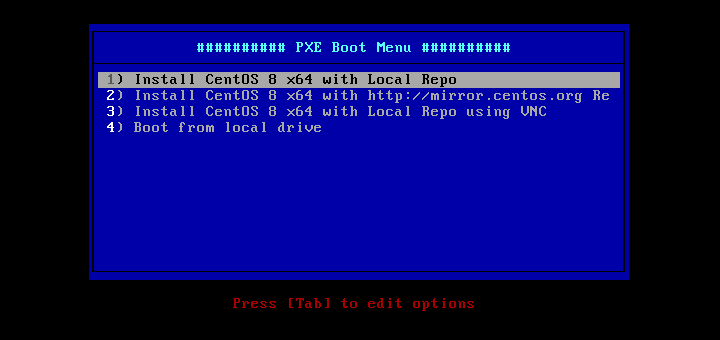
Install Multiple Linux Distributions Using PXE Network Boot on RHEL/CentOS 8

PXE Server – Preboot eXecution Environment is a standardized client-server architecture that instructs a client system to boot, run, or

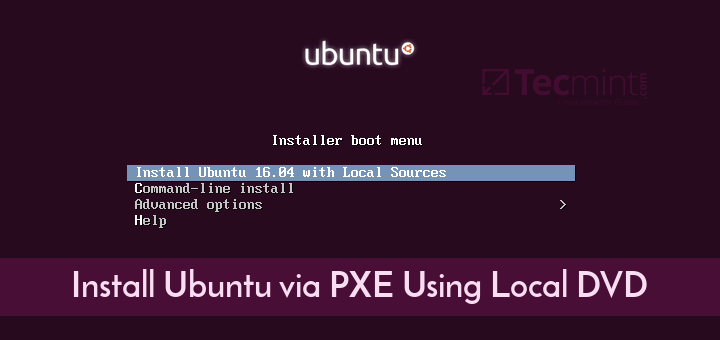
Install Ubuntu via PXE Using Local DVD

How to Install Ubuntu via PXE Server Using Local DVD Sources

PXE or Preboot eXecution Environment is a server-client mechanism which instructs a client machine to boot form network. In this
Install Windows 7 Over PXE in CentOS

Installing Windows 7 over PXE Network Boot Server on RHEL/CentOS 7 using WinPE ISO Image – Part 2

Continuing the series regarding installing Windows 7 over RHEL/CentOS 7 PXE Network Boot, where in the first part I have
Setting Prerequisites to Install Windows 7 Over PXE

Setting Up Prerequisites to ‘Install Windows 7’ over ‘PXE Network Boot Server’ on RHEL/CentOS 7 – Part 1

Continuing the series of tutorials regarding RHEL/CentOS 7 PXE Network Boot Server Environment, where so far I have only discussed
Add Ubuntu to Pxe Boot in CentOS

Adding Ubuntu 14.10, Ubuntu 14.04 and Debian 7 to PXE Network Boot Environment Setup on RHEL/CentOS 7

This tutorial will guide you on how to add Ubuntu 14.10 Server, Ubuntu 14.04 Server and Debian 7 Wheezy distributions
Automatic Multiple Linux Installation

Automated Installations of Multiple RHEL/CentOS 7 Distributions using PXE Server and Kickstart Files

This article is an extension of my previous PXE Boot Environment Setup on RHEL/CentOS 7 and it’s focused on how
Setting PXE Network Boot in CentOS

Setting up a ‘PXE Network Boot Server’ for Multiple Linux Distribution Installations in RHEL/CentOS 7

PXE Server – Preboot eXecution Environment – instructs a client computer to boot, run or install an operating system directly
Network Installation of Debian 7

Network Installation of “Debian 7 (Wheezy) on Client Machines using DNSMASQ Network Boot Server

This tutorial will guide you on how you can install Debian 7 (Wheezy) directly from a network location using DNSMASQ

TecMint Weekly
Get the Learn Linux 7 Days Crash Course free when you join 34,000+ Linux professionals reading every Thursday.
Check your email for a magic link to get started.
Something went wrong. Please try again.
Free forever. Unsubscribe anytime.
Learn Linux Right Way
15 structured courses, ad-free articles, and the weekly newsletter in one place.
  • ✓SSH, Bash, Ubuntu, Golang, RHCSA, RHCE, LFCS, LFCA and more
  • ✓Ad-free access to all premium articles
  • ✓Priority help and Telegram community
  • ✓Weekly newsletter every Thursday
Join Root from $8/mo
$8/mo or $59/yr. Cancel anytime.

Linux Server Monitoring Tools

Iotop – Monitor Linux Disk I/O Activity and Usage Per-Process Basis

5 Tools to Scan a Linux Server for Malware and Rootkits

4 Useful Tools to Monitor CPU and GPU Temperature in Ubuntu

How to Install Nagios Monitoring in RHEL, Rocky, and AlmaLinux

Setting Up Real-Time Monitoring with ‘Ganglia’ for Grids and Clusters of Linux Servers

pyDash – A Web Based Linux Performance Monitoring Tool

Learn Linux Tricks & Tips

Linux Uptime Command With Usage Examples

Use ‘pushd’ and ‘popd’ for Efficient Filesystem Navigation in Linux

10 Advanced Linux Commands You’ve Probably Never Used (Part 3)

How to Extend Root Partition in Linux

How to Create and Execute a .Jar File in Linux Terminal

16 Top Command Examples in Linux [Monitor Linux Processes]

Best Linux Tools

Top 5 Linux Programs for Students in 2025

11 Best PDF Editors to Edit PDF Documents in Linux

15 Best Kali Linux Web Penetration Testing Tools

6 Best Modern Linux ‘init’ Systems (1992-2025)

8 Best Open-Source Disk Cloning & Backup Tools for Linux (2024)

10 Best Linux File and Disk Encryption Tools (2024)

Tecmint: Linux Howtos, Tutorials & Guides © 2026. All Rights Reserved.

The material in this site cannot be republished either online or offline, without our permission.

Hosting Sponsored by : Linode Cloud Hosting