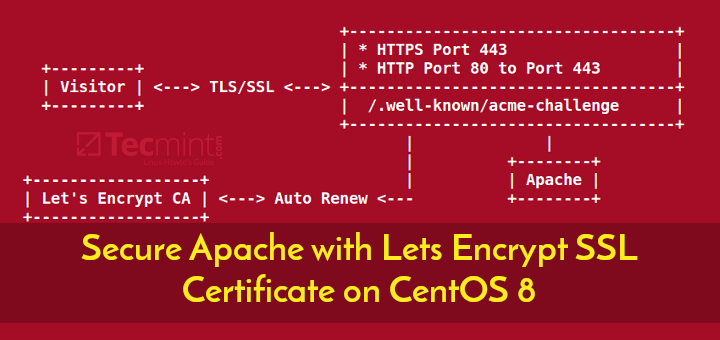
How to Secure Apache with Let’s Encrypt SSL Certificate on CentOS 8
Securing your web server is always one of the key factors that you should consider before going live with your

Hi, I’m Ravi Saive, a passionate Linux enthusiast with over 16+ years of experience. I have written more than 3000+ articles on Linux, sharing my knowledge and expertise with the community.
Welcome to my blog! I share easy-to-follow articles on Linux, SysAdmin, Cloud, and DevOps. With over 250+ million visitors, Tecmint has helped many people grow their Linux careers.
Join me in exploring the world of open-source and unlock the power of Linux by subscribing to our weekly newsletter or checking out our Pro Courses for deeper learning!

Securing your web server is always one of the key factors that you should consider before going live with your
SSH (Secure Shell) is an open-source network protocol that is used to connect local or remote Linux servers to transfer

There are tons of open-source network monitoring tools available for the Linux operating systems on the web. Say, you can
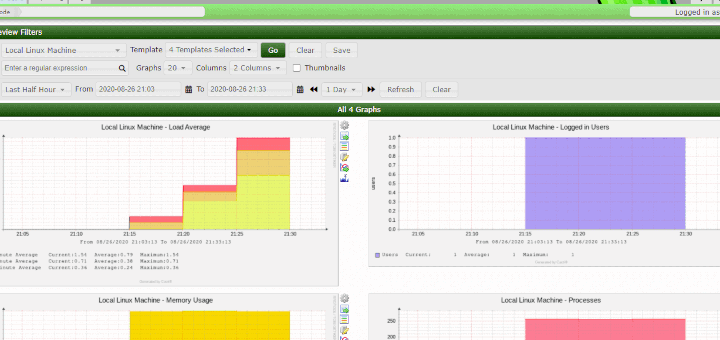
Cacti is an open-source web-based network monitoring and graphing tool written in PHP. It was designed as a front-end application
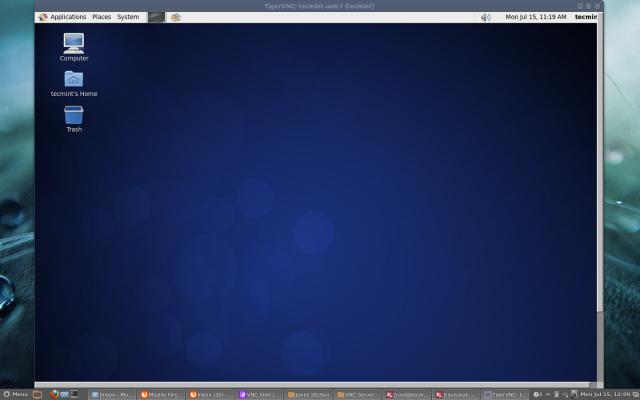
Virtual Networking Computing (VNC) is a kind of remote sharing system that makes it possible to take control of any
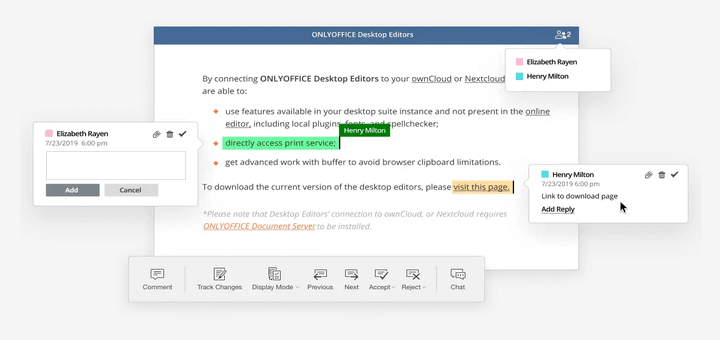
Compiling software from source code might sound frightening, especially if you have never done it before. If you are a
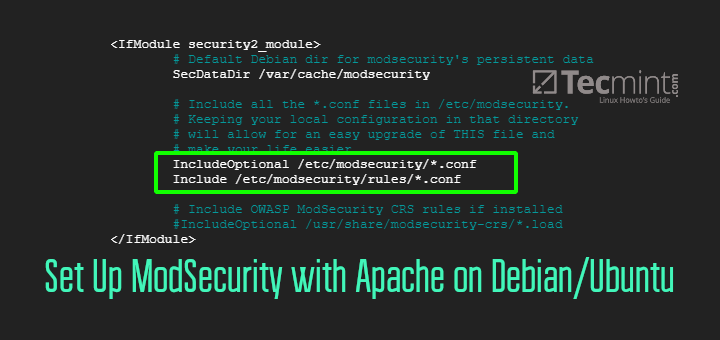
The Apache web server is highly customizable and can be configured in multiple ways to suit your needs. There are

Written in PHP, Magento is a popular open-source, and versatile eCommerce platform that provides businesses with an online shopping cart.
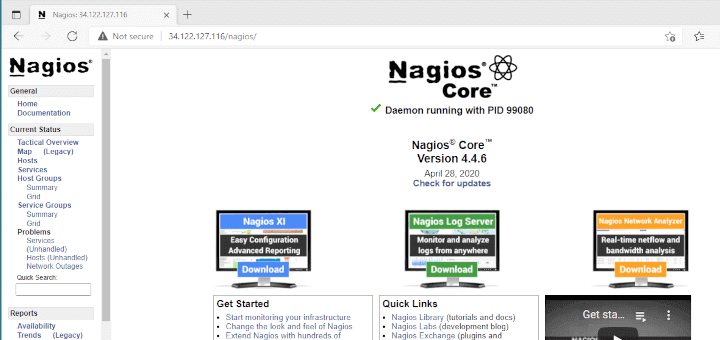
Nagios is a free and open-source tool for monitoring systems, networks, and infrastructure. Nagios provides a web interface for viewing

On March 7, 2016, Microsoft announced the introduction of the MS SQL server in Linux systems. The goal was to

Written in PHP, Joomla is a popular CMS (Content Management System) used for creating stunning websites and blogs using themes,

The echo command is one of the most commonly and widely used built-in commands for Linux bash and C shells,