
What IP – A Network Information Tool for Linux

What IP is a graphical-based simple network information tool which provides information about IP address and listening ports. It is written in Python and GTK3. It is released under GPL3 license and the source code is available in GitLab.

Features

  • Get public, virtual, or local IP address.
  • The IP address is based on our location and it helps to verify our VPN connectivity.
  • Test the listening ports and check if they are publicly available.
  • List all devices on your LAN.

Installing What IP – Network Information Tool in Linux

We need to have Flatpak configured on the system to install What IP from FlatHub. I am using Linux Mint 20.04 which has Flatpak enabled by default. Before proceeding with the installation make sure the Flatpak is configured on your distribution. To configure Flatpak take a look at setting up flatpack on Linux article.

Run the following command to install What IP from FlatHub.

$ flatpak install flathub org.gabmus.whatip

Launch the application by running the following command.

$ flatpak run org.gabmus.whatip

When you launch the application, the information will be popped up to confirm to connect to a third-party service to retrieve geolocation information. Select “Yes” or “No” based upon your choice.
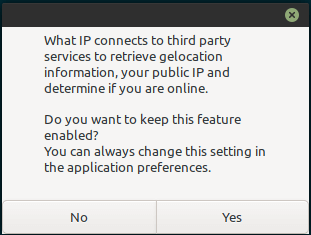
What IP Connects
What IP Connects

You can also choose to turn off this feature from preferences.
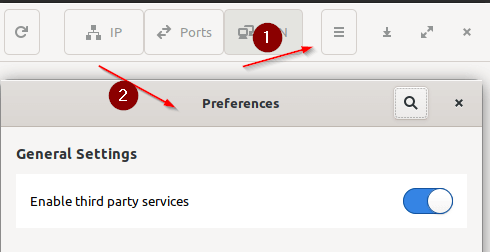
What IP Preferences
What IP Preferences

Lets’s look at the interface. The interface is very simple to use. All you have is 3 tabs.

The first tab displays the Public, Local or Virtual Interface IP address.
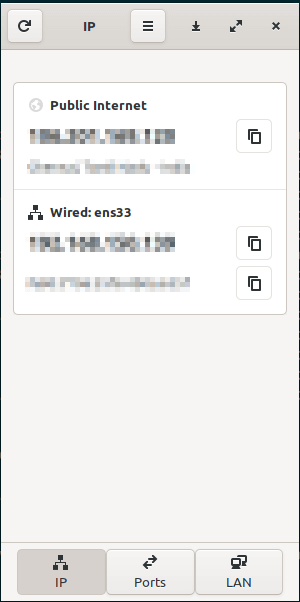
List Linux IP Information

The second tab shows the list of ports listening. You can also test the connection by pressing the icon on the right-hand side as pointed out in the image.

List Linux Ports Information

The third tab displays information about LAN.
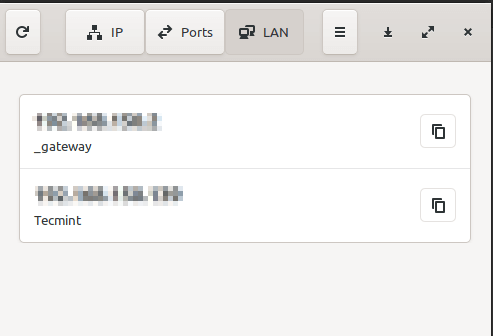
List Linux LAN Information

You can scan the IP, Ports, and LAN information by pressing the refresh button at the top left-hand corner. This will scan for any potential changes and keep the tool updated.
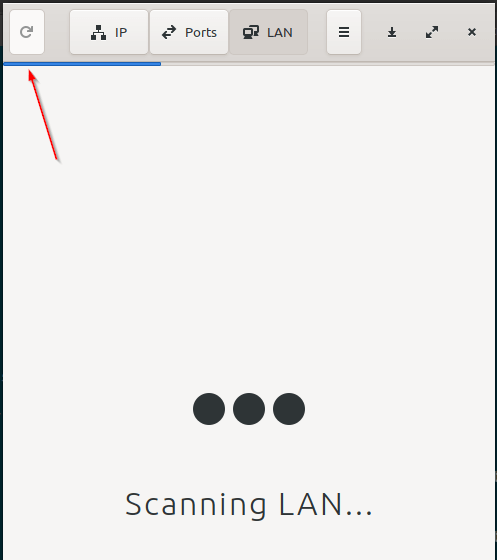
What IP Scanning
What IP Scanning

To uninstall What IP from your system run the following command.

$ flatpak uninstall org.gambus.whatip

That’s it for this article. What IP is a simple tool that might come in handy. Try it out yourself and share your experience with us in the comment section below.

If this article helped, with someone on your team.

TecMint Weekly Newsletter
Get the Learn Linux 7 Days Crash Course free when you join 34,000+ Linux professionals reading every Thursday.
Check your email for a magic link to get started.
Something went wrong. Please try again.
TecMint has been free for 14 years. Help keep it that way.
Google AI Overviews and tools like ChatGPT have cut into search traffic for independent tech sites like TecMint. Running this site costs over $2,000 every month for hosting, infrastructure, and paying authors to keep the content accurate and tested.

If this article helped you solve a problem, consider buying a coffee. It helps keep TecMint free, supports the authors, and keeps the project going.
☕ Buy Me a Coffee
Karthick
A passionate software engineer who loves to explore new technologies. He is a public speaker and loves writing about technology, especially about Linux and open source.

Each tutorial at TecMint is created by a team of experienced Linux system administrators so that it meets our high-quality standards.

Got Something to Say? Join the Discussion...

Thank you for taking the time to share your thoughts with us. We appreciate your decision to leave a comment and value your contribution to the discussion. It's important to note that we moderate all comments in accordance with our comment policy to ensure a respectful and constructive conversation.

Rest assured that your email address will remain private and will not be published or shared with anyone. We prioritize the privacy and security of our users.

Free Course
Get a free Linux course before you go.
Subscribe to TecMint Weekly and get the Learn Linux 7 Days Crash Course free. Read by 34,000+ Linux professionals every Thursday.
Something went wrong. Please try again.
Check your email for a magic link to get started.