

Sysmon is a Linux activity monitoring tool similar to Windows task manager, was written in Python and released under GPL-3.0 License. This is a Graphical visualization tool that visualizes the following data.
By default distribution like Ubuntu comes with a system monitor tool, but the drawback with the default monitor tool is it does not display HDD, SSD, and GPU loads.
Sysmon adds all the features to a single place similar to the Windows Task Manager.
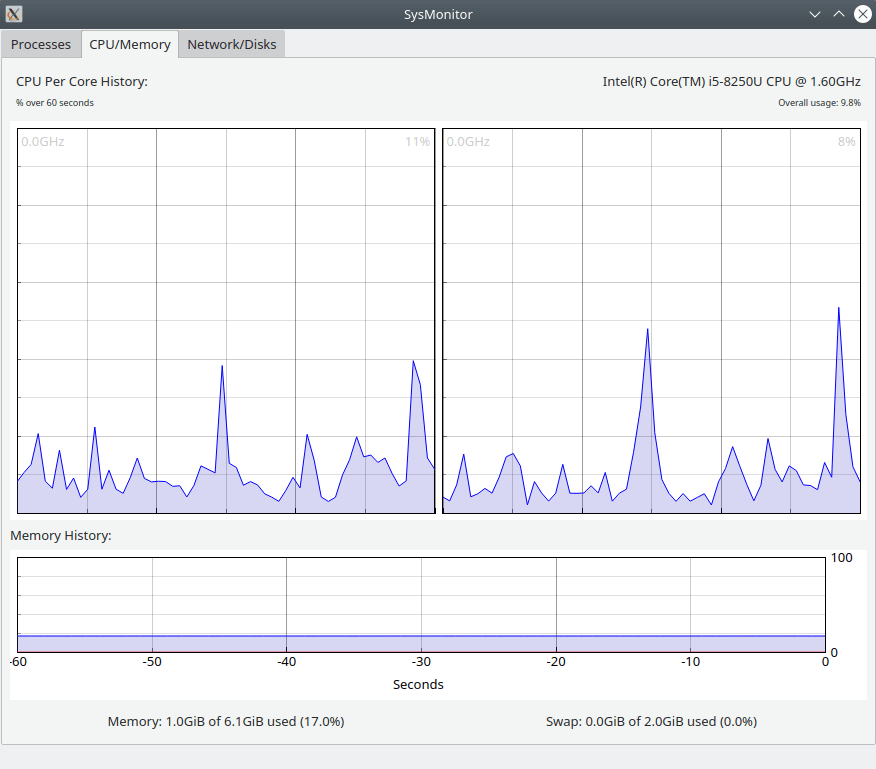
- CPU/GPU utilization and per-core clock speed.
- Memory and Swap utilization.
- Network utilization (Wlan and Ethernet). WLAN link bandwidth is constantly updated.
- SSD/HDD utilization.
- Overview of a running process.
In this article, you will learn how to install and use the Sysmon monitoring tool in Linux desktop systems.
Installing Sysmon Linux Monitor Tool
Since sysmon is written in python, you need to have a python package manager PIP setup in your machine. Sysmon depends on the following packages pyqtgraph, numpy, and pyqt5.
Install Sysmon Using PIP
When you install the sysmon using PIP dependencies are automatically installed.
$ pip install sysmon   [for Python2]
$ pip3 install sysmon  [for Python3]
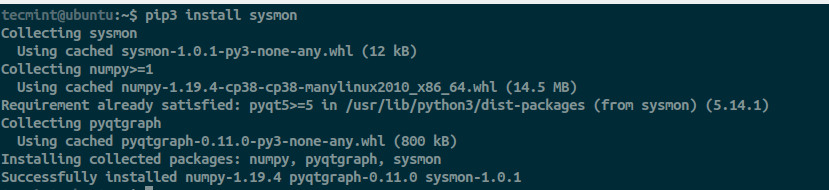
If you have an Nvidia GPU, nvidia-smi has to be installed to monitor it.
Install Sysmon Using GitHub Repo
Alternatively, you can pull the repository from Github and install the package. But when following this method you have to make sure the dependent package (numpy, pyqtgraph, pyqt5) is installed separately.
$ pip install pyqtgraph pyqt5 numpy   [for Python2]
$ pip3 install pyqtgraph pyqt5 numpy  [for Python3]
You can check the list of installed packages from pip using the following commands.
---------- Python 2 ----------
$ pip list                       # List installed package
$ pip show pyqt5 numpy pyqtgraph # show detailed information about packages.

---------- Python 3 ----------
$ pip3 list                       # List installed package
$ pip3 show pyqt5 numpy pyqtgraph # show detailed information about packages.
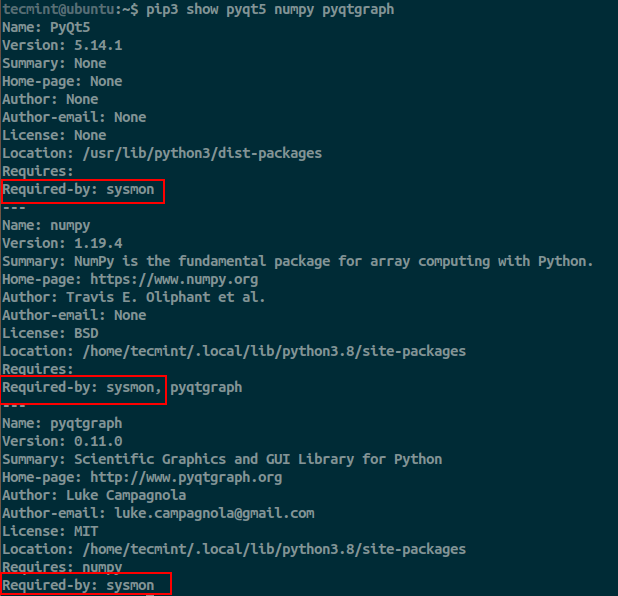
Now the dependency is satisfied and good to install sysmon by cloning the repo from GitHub.
$ git clone https://github.com/MatthiasSchinzel/sysmon.git
$ cd /sysmon/src/sysmon
$ python3 sysmon.py
The preferable method is to install packages using PIP, as PIP handles all the dependency and keeps the installation simple.
How to Use Sysmon in Linux
To launch sysmon, simply type sysmon at the terminal.
$ sysmon
All the data points are grabbed from the /proc directory.
- CPU data are grabbed from /proc/cpuinfo and /proc/stat.
- Memory data are grabbed from /proc/meminfo.
- Disks data are grabbed from /proc/diskstats.
- Network data are grabbed from /proc/net/dev and iwconfig (Wlan).
- Processes data are grabbed from the ‘ps -aux’ command.
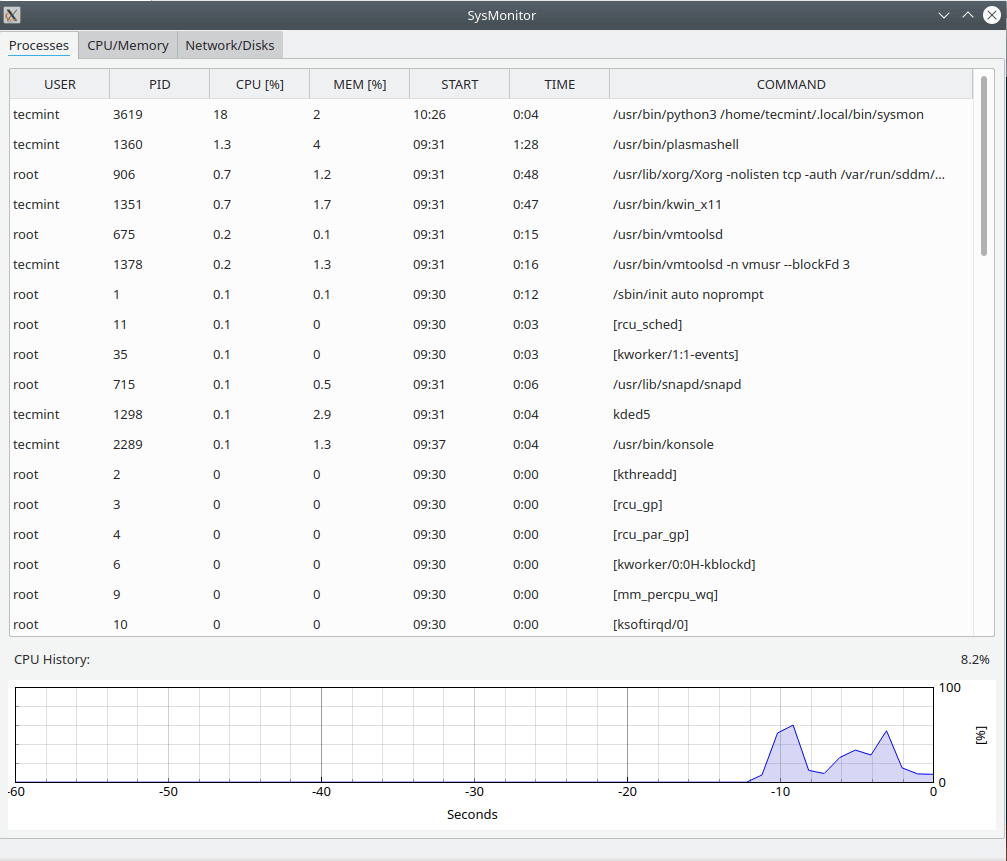
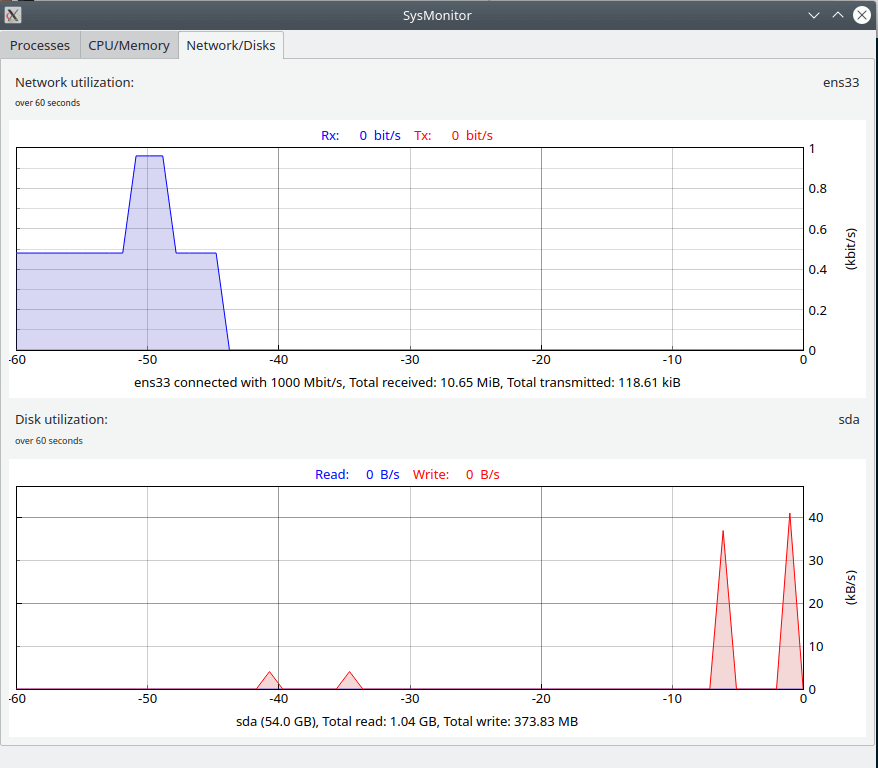
That’s it for this article. This tool is just a prototype and many more features like IOWait, Support for Intel and AMD GPU, Dark Mode, kill the process, sort, etc.. are in the pipeline to be added. Let’s wait and see how this tool is getting matured over a period of time.

This does NOT WORK on Ubuntu 20.04. It has a load of bugs in it. Too numerous to mention here and I was not impressed with the experience of having to type new lines for it to find the files sysmon was installed in. I’ll give you a hint: ./local
@Tom
Thanks for sharing your feedback. sysmon is just a prototype version as of now. we have to wait and see how this tool is maturing in the coming days.
This is great of course. Just wondering, how is this better than other similar tools like bpytop?
At this time it is not better compared to tools like bpytop since this tool is at the initial development stage.